Medical practices in Santa Monica manage highly sensitive information every day. Patient records, diagnostic data, insurance documentation and billing systems all rely on secure digital infrastructure.
Without structured Cybersecurity for Medical Practices in Santa Monica, healthcare providers risk data breaches, regulatory penalties and disruption to patient care. Modern medical offices must implement layered security frameworks that protect electronic health records while maintaining regulatory compliance.
Why Cybersecurity for Medical Practices in Santa Monica Is Critical
Healthcare organizations remain one of the most targeted industries for cyberattacks. Medical data is extremely valuable because it contains personal identifiers, financial records and clinical history.
Common risks for medical practices include:
- Phishing attacks targeting administrative staff
- Unauthorized access to electronic health record (EHR) systems
- Ransomware attacks disrupting patient scheduling and records
- Weak password policies and unmanaged endpoints
- Insecure remote access to medical systems
Security recommendations from the Cybersecurity and Infrastructure Security Agency emphasize continuous monitoring and endpoint protection for healthcare environments.
For practices relying on computer support Los Angeles or IT support Culver City, cybersecurity must extend beyond basic antivirus protection.
Key Security Layers That Protect Patient Data
Effective cybersecurity strategies combine multiple technologies and policies to minimize exposure.
Endpoint Protection and Device Monitoring
Medical staff frequently access systems through laptops, tablets, and mobile devices. Endpoint Detection and Response (EDR) tools monitor device activity in real time, identifying suspicious behavior before it spreads across the network.
Guidelines from the National Institute of Standards and Technology highlight endpoint monitoring and vulnerability management as essential cybersecurity controls.
Secure Network Architecture
Healthcare offices rely on secure network design implementation to separate clinical systems from administrative networks. Segmented networks reduce the risk of lateral movement if a device becomes compromised.
Encrypted Communication and Secure Email
Medical communication often includes sensitive patient information. Encrypted email platforms and secure file transfer tools protect clinical data during transmission and storage.
Security best practices promoted by Microsoft recommend encryption both in transit and at rest for organizations handling confidential information.
Multi-Factor Authentication and Identity Access Management
Access to patient data should always require multiple layers of authentication. Multi-factor authentication (MFA) prevents unauthorized entry even if login credentials are compromised.
HIPAA Compliance and Regulatory Requirements
Healthcare organizations in Santa Monica must comply with federal healthcare privacy regulations. Compliance standards established by the U.S. Department of Health and Human Services require medical practices to protect electronic protected health information (ePHI).
Key compliance measures include:
- Encryption of stored and transmitted data
- Controlled access to medical records
- Documented incident response procedures
- Continuous monitoring and audit logs
- Risk assessments for IT infrastructure
Without proper cybersecurity controls, practices may face significant regulatory penalties and reputational damage.

Common Cybersecurity Mistakes in Medical Offices
Many smaller healthcare practices unintentionally create vulnerabilities by relying on outdated IT systems or informal security practices.
Frequent issues include:
- Shared login credentials for medical systems
- Lack of automated software updates
- Inconsistent backup verification
- Weak remote access security for telehealth systems
- Absence of structured disaster recovery planning
Clinics that rely only on reactive computer repair Culver City services often discover that recurring technical issues are symptoms of deeper infrastructure weaknesses.
A Practical Example from Santa Monica
A private medical clinic in Santa Monica experienced repeated phishing attempts targeting front desk staff. The practice relied on basic antivirus software and had no centralized security monitoring.
After implementing a comprehensive cybersecurity strategy that included endpoint protection, encrypted email systems and staff security awareness training, the clinic significantly reduced phishing incidents and strengthened compliance documentation.
This transition from reactive troubleshooting to proactive cybersecurity improved system reliability and protected patient records.
Building a Long-Term Security Strategy
Cybersecurity for medical practices requires continuous improvement. A structured strategy typically includes:
- Comprehensive IT infrastructure assessment
- Implementation of endpoint security and EDR tools
- Deployment of MFA and identity access controls
- Encrypted data storage and secure communication platforms
- Automated backups with disaster recovery testing
- Ongoing staff cybersecurity training
For healthcare providers operating across Santa Monica, Beverly Hills and Los Angeles, these controls create a secure foundation for digital healthcare services.
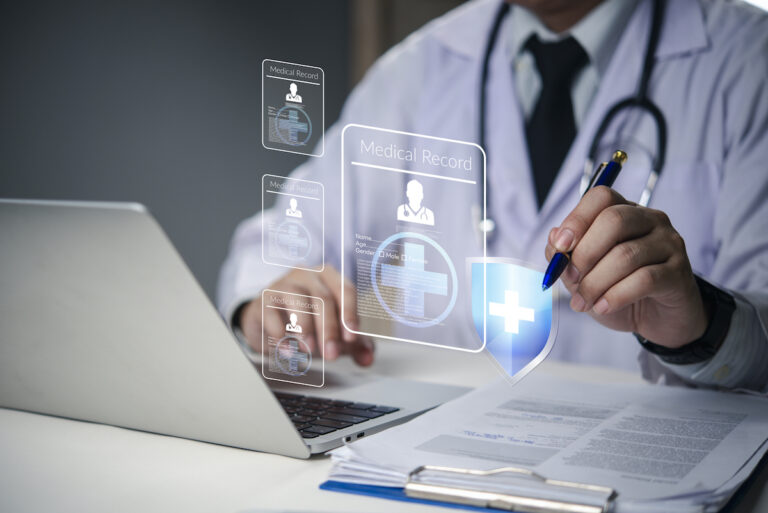
Doctor hand using digital medical record system on virtual screen, health data management, patient information, healthcare technology, telemedicine, hospital administration.
How TechCare Computers Supports Medical Practices in Santa Monica
TechCare Computers specializes in providing secure IT infrastructure and cybersecurity solutions tailored for healthcare providers.
Our offerings include:
Managed IT Services: Continuous monitoring, system updates and infrastructure management.
Cybersecurity Solutions: Endpoint protection, firewalls, encryption and proactive threat detection.
Cloud Backup & Recovery: Secure medical data storage with fast disaster recovery capabilities.
Network Design & Implementation: Segmented and optimized networks that support healthcare compliance.
Helpdesk Support: Immediate troubleshooting and technical guidance for medical staff.
Investing in professional cybersecurity solutions allows medical practices to protect patient data while maintaining compliance and operational efficiency. Contact TechCare Computers today to develop a secure IT strategy for your Santa Monica medical practice.